






Table of Contents
A crooked cut or a snapped blade mid-shift is not a blade problem. Nine times out of ten, it is a maintenance problem that showed up a few days too late. For metal fabricators, a band saw is production equipment, and when it goes down, the whole shop feels it. This guide covers what to check daily, weekly, and monthly, explains why each check matters, and shows how to build a log you’ll actually use.
Key Takeaways
- Consistent maintenance keeps a band saw cutting square, extends blade life, and prevents unplanned downtime.
- Daily checks cover the blade, guides, coolant, chips, the vise, and hydraulic oil.
- Weekly checks cover wheel surfaces, drive belts, the coolant tank, and the hydraulic system.
- Monthly checks cover wheel bearings, blade guide adjustment, and machine level.
- A refractometer confirms coolant concentration; a log turns one-time fixes into permanent practice.
Daily band saw maintenance: the checks that protect every cut
These tasks take 10 to 15 minutes at the start or end of a shift. Metal cutting produces abrasive chips fast, and chips that re-enter the cut or build up around the blade guides cause damage that compounds with every pass.
| Task | Why it matters |
|---|---|
| Inspect blade for cracked, chipped, or missing teeth | A damaged blade affects every cut until replaced |
| Confirm blade tension and tracking against the manual | Incorrect tension is the primary cause of blade breakage at weld points |
| Check blade guides for chips, wear, and adjustment | Worn guides are the leading cause of crooked cuts |
| Verify coolant level, concentration, and nozzle flow | A weak mix or blocked nozzle overheats teeth within minutes |
| Clean blade wipers and chip brush | Loaded wipers stop clearing chips and contaminate the cut |
| Clear chips from the table, vise, and guide areas | Chip buildup around the guides accelerates wear on both the guides and the blade. |
| Check hydraulic oil level; scan for leaks | Low oil causes erratic head descent and uneven feed pressure |
| Confirm vise clamping, guard function, and emergency stop | A loose vise or dead stop is a safety failure before it is a maintenance one |
Weekly band saw maintenance: the deeper inspection
Budget 30 to 60 minutes once a week with the saw locked out. These checks target systems that wear gradually, show no early symptoms, and typically fail mid-job when they finally go.
- Clean wheel housings and inspect wheel surfaces for chip buildup or damage.
- Check wheel brushes and replace any worn down to the nubs—a dead brush stops clearing chips from the blade gullet and shortens blade life quickly.
- Inspect drive belts for cracks, glazing, or stretch; a slipping belt changes blade speed and produces erratic cuts.
- Check hydraulic oil for a milky appearance, which signals water contamination, and inspect hoses and fittings.
- Clean the coolant tank screen and check the pump and hoses for blockage or leaks.
- Lubricate the vise lead screw and slides; dry threads cause stiff movement and accelerate wear.
- Inspect electrical cords, switches, and controls for visible damage.
Monthly band saw maintenance: bearings, oil, and alignment
Plan 60 to 90 minutes. These components fail slowly with no early warning until cut quality drops or the machine stops entirely.
Wheel bearings. Check for play, roughness, or noise. Worn bearings cause erratic blade
Blade guide adjustment. Per the SU-280-G operator manual, monthly is the correct interval. Loosen the side plate screws, adjust the distance between the plates via the set screw, and confirm the gauge slides smoothly without wobbling. Misadjusted guides are the most common undiagnosed cause of crooked cuts.
Coolant tank. Drain, clean, and remove sludge and tramp oil. Settled sludge harbors bacteria that can sour a functional coolant mix almost overnight.
Machine level and frame. Verify the saw is still level and check the frame, welds, and guards for cracks or new vibration. An out-of-level machine gradually skews the cut angle and adds stress to the frame.
Test cut. Run a sample cut and confirm the saw still cuts square. Monthly is the only chance to catch drift before a job reveals it.
Note: gearbox oil change and hydraulic fluid filter replacement intervals are specified in your operator manual; follow those exactly rather than a generic calendar.
Safety rules for every maintenance task
Lock out and tag out the power supply before any service work, without exception. Never clear chips by hand, even with the saw stopped; use a brush or chip hook. Chips are sharp and hot, and coolant-wet floors around the saw are a slip hazard. Keep all guards installed whenever the saw runs, and wear safety glasses throughout every task.
How to read and maintain coolant concentration
The SU-280-G operator manual specifies pure, synthetic water-soluble coolant at a 7:1 water-to-concentrate ratio. Using any other coolant type can damage the machine and shorten blade life. A refractometer gives a precise concentration reading at any time; a quick visual check catches the obvious failures first.
| What you see or smell | What it means | Action |
|---|---|---|
| Milky or sour-smelling mix | Bacterial growth | Drain, clean tank, rebuild mix |
| Clear mix with floating oil layer | Tramp oil contamination | Skim tramp oil; clean tank if persistent |
| Foaming during cuts | Concentration too high | Dilute to the specified 7:1 ratio |
| Rapid rust between shifts | Concentration too low | Add concentrate; confirm with refractometer |
When rebuilding the mix, always add concentrate to water—never the reverse. For more on how blade condition interacts with coolant quality, see Scotchman circular saw blades.
Troubleshooting: what crooked cuts and blade failure mean
Work from the checklist outward before replacing a blade. Most failures trace to a maintenance item, not the blade itself.
| Symptom | Most likely cause | First check |
|---|---|---|
| Crooked cuts | Worn guides or incorrect tension | Clean and inspect guides; confirm tension against manual |
| Teeth chipping or stripping early | Excessive feed pressure or wrong blade pitch | Reduce feed force; check blade pitch matches material |
| Blade breaking at weld points | Incorrect tension | Reset to manual specification |
| Sudden drop in cutting rate | Dull teeth, incorrect coolant, or feed set too high | Check coolant concentration first, then feed setting |
| Vibration during cuts | Loose fasteners or worn bearings | Check mounting bolts; inspect wheel bearings |
How to build a band saw maintenance log that gets used
A log that lives on a clipboard next to the saw gets used. One filed in an office binder does not. Keep it simple: date, machine ID, tasks completed, parts replaced, coolant concentration reading, technician initials, and any problem found with the corrective action taken.
Review it monthly. Repeated items are an early warning that a component is heading toward failure. Catching them in the log is always cheaper than catching them mid-cut. The Fabricator’s guidance on preventive maintenance for sawing equipment, published in their metal fabrication resource library at thefabricator.com, recommends posting the schedule on the machine so entries happen consistently rather than from memory.
Keep Your Band Saw Running
A band saw that gets consistent daily, weekly, and monthly attention cuts square, holds tolerance, and runs through far more material before a blade needs replacing. The difference between a saw that earns its floor space and one that generates emergency calls is almost always the log behind it.
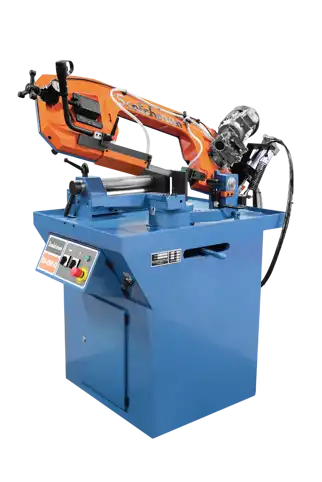
Scotchman’s SU-280-G Utility Band Saw is built for this kind of shop: a rugged horizontal metal cutting saw with a built-in blade tension gauge, carbide blade guides with roller supports, a recirculating coolant system, and a 3-year parts warranty. See full specifications and request a price.
Frequently asked questions
Here are answers to the most common band saw maintenance questions. Always cross-reference specific fluid types, quantities, and change intervals with your operator manual.
How often should a band saw be maintained?
Basic checks every shift, deeper inspections weekly, and preventive work monthly. Inspect the blade, guides, coolant, and chips daily; check wheels, belts, and hydraulics weekly; and check bearings, guides, and machine level monthly. The saw’s manual specifies gearbox oil change intervals. Follow those rather than a generic number.
What is the first daily task?
Inspecting the blade. A damaged blade affects every cut until you replace it. Check teeth for cracks, chips, and missing tips, and confirm tension and tracking. The check takes a few minutes and prevents ruined workpieces and further machine damage.
Why is my band saw cutting crooked, and how do I fix it?
Worn blade guides are the most common cause, followed by incorrect blade tension and tracking. First, clean and inspect the guides, then confirm tension against the manual, then check wheel tracking. If the cut still drifts after those three checks, you may need to realign the guide arm.
What coolant should a metal cutting band saw use?
The SU-280-G manual specifies pure, synthetic, water-soluble coolant at a 7:1 water-to-concentrate ratio. Other coolant types can damage the machine and reduce blade life. Confirm concentration with a refractometer, skim tramp oil regularly, and drain and clean the tank monthly.
How long do band saw blades last?
Blade life depends on material, blade speed, feed force, and coolant condition; no single number applies across shops. For the biggest factors, see how to measure a bandsaw blade for guidance on blade selection. A maintenance log that records blade changes alongside material types will show the real lifespan for your specific operation.
Does the blade tension gauge on my saw tell me the exact tension?
The built-in gauge is a useful reference, but cross-check it against the tension specification in your operator manual for the blade width in use. If cuts start drifting or blade life drops unexpectedly, recalibrate against the manual before changing the blade.