


.jpg)
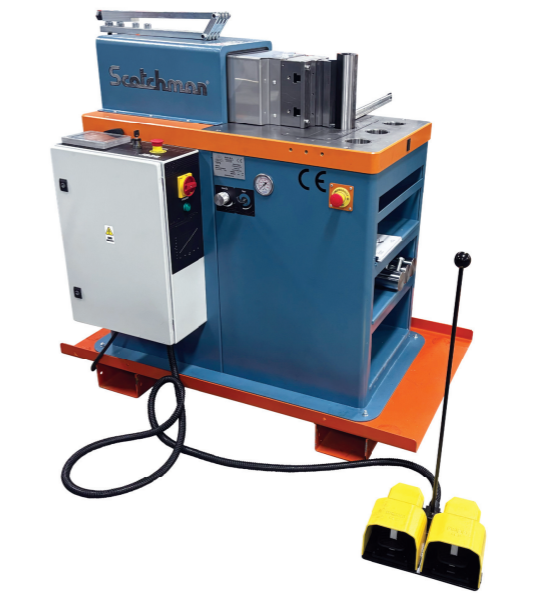
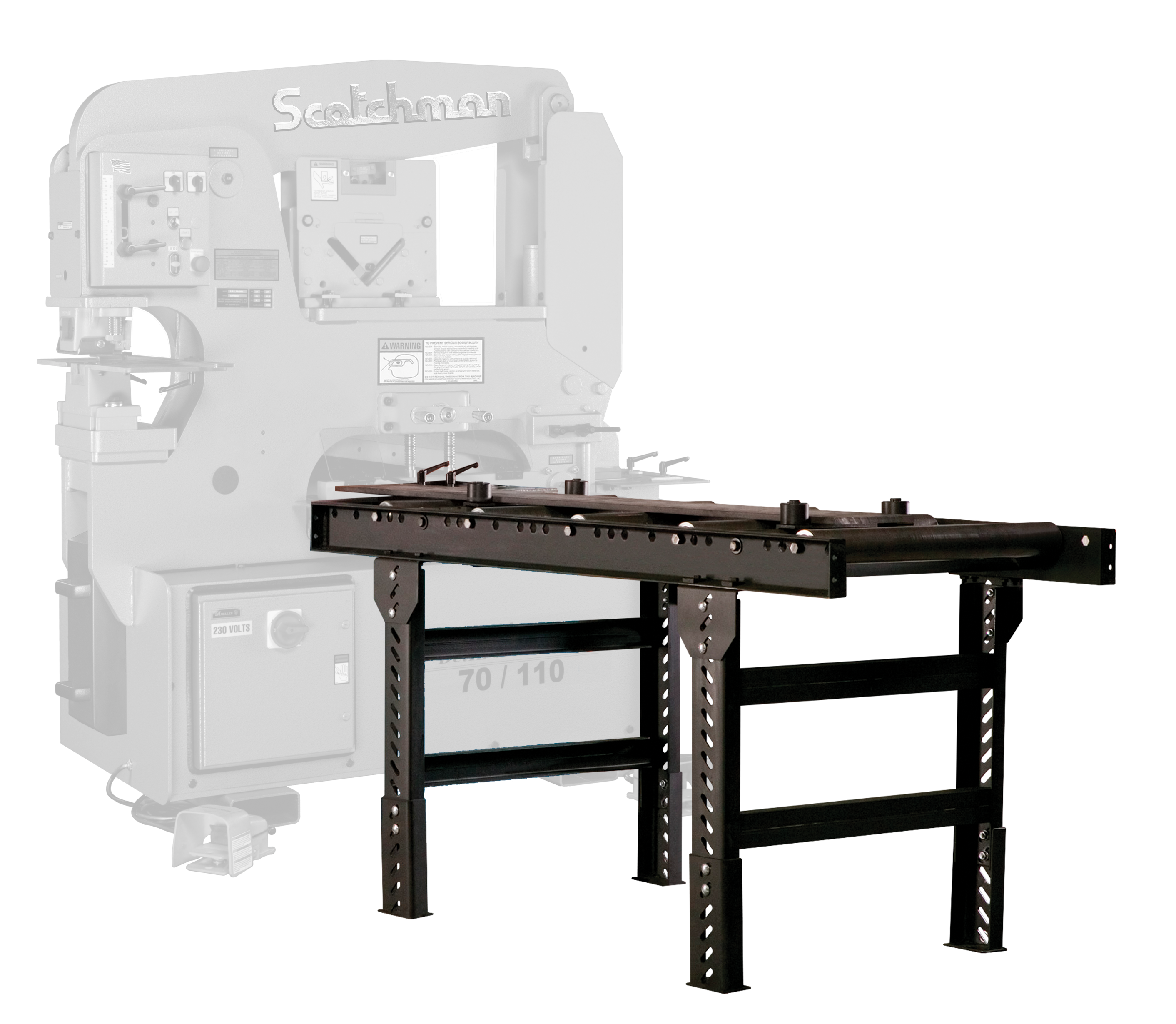


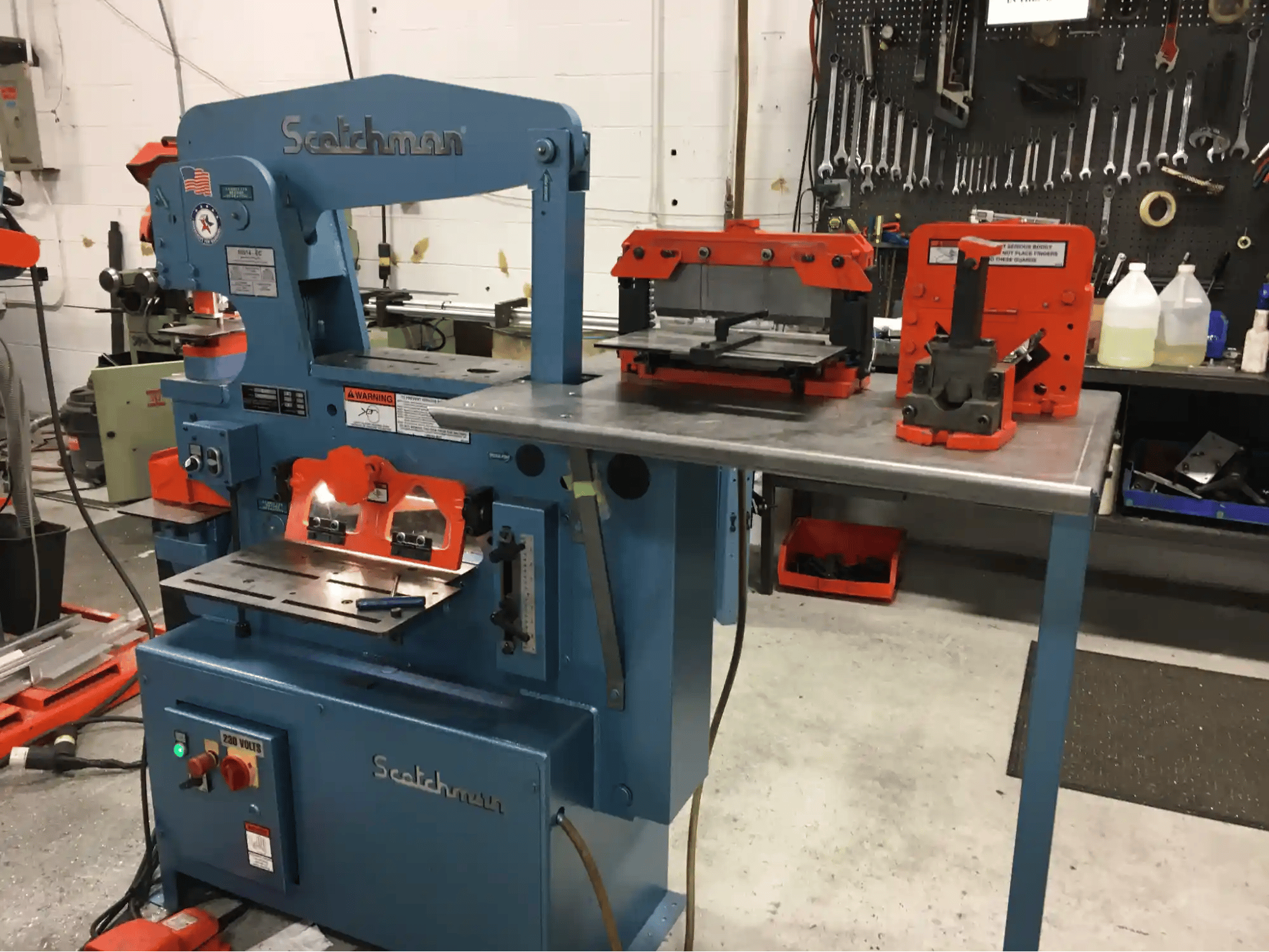
An ironworker machine performs multiple metal fabrication tasks, punching, shearing, notching, and bending, all from a single compact workstation. That's different from what a human ironworker does: a tradesperson who erects structural steel on job sites, not a shop machine.
Here's a closer look at what this machine actually does, why fabrication shops rely on one, and what to consider before buying.
What Is an Ironworker Machine?
An ironworker is a hydraulic machine built to process metal plate, angle, bar, channel, and round or square stock. Most ironworkers on the market today, including Scotchman's full line, run on hydraulic power rather than the older mechanical designs some manufacturers still offer.
The real value of an ironworker machine is consolidation: instead of running stock through separate punch, shear, and notcher stations, one machine handles all three from a single tool table, saving floor space and reducing material handling between stations.
What an Ironworker Machine Does
Punching is one of the most common jobs for an ironworker, making holes in plates, angles, and flat bars. On a hydraulic ironworker, punching replaces drilling for repetitive holes and is generally faster and more efficient for that kind of work.
Shearing and cutting covers flat bar, angle iron, round bar, square bar, or channel, depending on the machine's setup and tooling. A variable rake angle on the shear blade minimizes distortion in the cut and keeps cycle times fast, useful for quick stock prep or production runs.
Notching, bending, and forming round out the core capabilities. Notching removes material for corner fit-up and fabrication prep, typically through a rectangular or 90° notcher station. Bending and forming are available on many machines when equipped with the right tooling, such as a press brake station, though the availability varies by model rather than being standard across the board.
In a typical shop, for example, a fabricator shears flat bar to length, punches mounting holes, and notches the corners, all on the same machine, to prep a batch of brackets without ever moving the stock to a second piece of equipment.
Why Fabrication Shops Use Ironworkers
The main draw is efficiency: fewer machine setups, less material handling between operations, a smaller equipment footprint, and faster turnaround on repeat jobs.
An ironworker complements the rest of a shop's equipment, saws, press brakes, and pipe notchers, rather than replacing them; it's built to consolidate the punching, shearing, and notching work that would otherwise require separate machines.
Capacity and tooling determine what any given ironworker can actually do. Tonnage, throat depth, blade capacity, and punch size all affect the maximum material thickness and hole size a machine can handle, so it's worth matching machine capacity to actual production needs rather than buying based on price alone.
Keeping ironworker tools, punches, dies, and shear blades organized and close to the machine also matters for changeover speed; an ironworker tooling cart is a simple way shops keep frequently swapped tooling on hand instead of hunting for it between jobs.
FAQ
What is an ironworker machine used for?
An ironworker machine punches, shears, notches, and bends metal in one workstation, handling plate, angle, bar, and channel stock so fabricators can prep material without moving it between separate machines.
Can an ironworker machine cut plate?
Yes, an ironworker can cut plate through its shear station, though the maximum thickness depends on the machine's tonnage and blade capacity. Higher-tonnage models handle thicker plate and heavier stock.
Is an ironworker the same as a press brake?
No. An ironworker is a multi-function machine that punches, shears, and notches, while a press brake is a dedicated bending machine. Some ironworkers add a press brake station as optional tooling.
What size ironworker machine do I need?
It depends on material type, thickness, hole size, and production volume. Higher-tonnage models handle thicker stock and larger holes, so match capacity to your actual jobs rather than buying on price alone.
.png)